Showing posts with label Mainstream. Show all posts

1.29.2010

Hell No This Ain't A Synthesis


If you know a little about hip-hop, you know that there's a widely perceived divide between "conscious" rap, and the mainstream stuff you hear on the radio. The narrative goes that conscious rap deals with politics, and leads to progress, while mainstream rap deals with diamonds, guns, and crunk juice, and is destructive to the hip-hop community. Hence, artist after artist proclaims, "hip hop is dead,"and the realness of the music has been sapped by materialist industry automatons like, say, Souljah Boy.

That's the story of hip-hop that any good fan knows. But what we don't always acknowledge is how the very act of telling that story is productive for the conscious rapper. It is a means of acquiring, in the eyes of fans and fellow artists, authenticity. It is a way of distinguishing oneself against the mainstream, and, as such, superior to it. Calling oneself a conscious rapper, or calling hip hop dead, is an elitist act which not only makes presumptuous claims about what's good for hip-hop, but also reinforces one's own position as insulated intellectual, and is by and large an act of vanity (To be clear, the act of "conscious rapping" is a beautiful thing, but the category is not).

Put that on the backburner for a hot minute, and let's turn to Beyonce and Single Ladies. The impetus for writing this was a minor question: "Is Single Ladies a simple upgrade of an old Betty Page dance?" That question birthed a major inquiry: "Is Single Ladies just another example of pop music upholding the ideological status quo?" That question birthed pages and pages of debate on this blog. And by asking that question, the big question, we stabbed ourselves in the heart.

For that question assumes that pop music is, essentially, an ideologically reproductive discourse. It labels pop artists as the automated mouthpieces of traditional American ideology, which in this case means consumerist, masculinist, and heterosexist. And then it asks, what is Beyonce's role in furthering those causes? Thus, we find, built into our very question is the elitist, intellectual, bourgeois, and liberal viewpoint that mainstream culture is generally bad for the people, for it upholds the status quo of conservative practice. So far so good. So we ask again:

Is Single Ladies just another example of pop music upholding the ideological status quo?

But while this question allows us liberals to feel safe about out own position as "above" mainstream culture, we actually prevent any type of liberal change to happen. That is, our very question cuts off the potential mouthpiece of progress (Beyonce), by constructing her position in society as powerless and ideologically stale. The question collapses our own ability to see Beyonce as progressive in her politics. And if you know anything about Beyonce, then you know her politics are radical. So, we silence the radical thought.

Beyond that, by critiquing pop stars on the grounds of stale ideology, like critiquing mainstream rap, we reproduce our own social status as the liberal intellectual elite. That is, it's incredibly safe for us, the critics, to call out pop music on its consumerist and masculinist tendencies, because that doesn't risk the production of new knowledge, knowledge that could be potentially harmful to our own comfortable position. If we listened differently to what Beyonce was saying, then we might actually hear something we think threatening-- that her, a pop star, really does support the swift execution of white masculinist rule in this country. By carrying out our typical liberal critique, we silence that voice.

So, here's your choice: A) You can buy into mainstream culture, and support mainstream ideology, or B) You can stand at a safe distance, and criticize it, further limiting mainstream culture's power to actually accomplish change. Both are ready-made, easy, risk-free options. And in fact, both support the status quo. You can take the red pill or the blue pill, and both come in a nice, safe, palatable package. Hell, THEY'RE THE SAME FUCKING PILL. This is the way American cultural hegemony works- it doesn't hide, it isn't secret, it's not a conspiracy. What it is is, though, is a dirty trickster, and it will convince you that your liberal, safe, stance on these issues is progressive, when in actuality your position is merely one half of the dialectical unity between you, the liberal, and the object of your criticism, the mainstream. Thus, we remain on our untouchable, protected, liberal island, the island of whiteness, class, and intellectualism, and all the while real instances of consumerism, racism, homophobia, sexism, ableism, etc... continue to circle us like hungry wolves.

So for those who are quick to proclaim Hip Hop Is Dead, or who believe that Single Ladies is just another sexy woman engaged in soliciting the male gaze, think about the power of your own gaze in constructing those stereotypical narratives. Think about the power of risk-free, procedural critique, which doesn't allow room for change, but rather encourages the further insulation of your own liberal values. Think about this, as you recede slowly into some irrelevant, white, safe middle distance, and your voice changes to that of the cranky old scholar, who's lost any ability to see the world other than the only way they know how.

11.03.2009

We are not the same, I am a martian.

I used to be just like all the haters, but at least I knew it:

The flow chart above was an attempt to understand why an upper middle class kid might simultaneously disdain popular hip hop for being "inauthentic" and "capitalist," fetishize popular music, and embrace underground hip hop or "backpacker rap." Starting from the foundations of rap as black counterculture, and moving down, I tracked an internal divide in hip hop music, and how both sects have been appropriated by white audiences. As the legend goes, mainstream hip hop's primary audience is white kids in the midwest. Think about all those Souljah Boy videos of girls in white tees and Clemson sweatpants. On the other hand, underground music has also been appropriated by a white audience, as a music that has some sort of power- in its perceived authenticity, and its anti-capitalist tendencies. Stop a random kid at an elite private college in the Northeast, ask him who his favorite rapper is, and you're as likely to hear the name Brother Ali as you are Biggie. The word "backpacker" has been thrown out in reference to this music, a term that resonates doubly, alluding to the purported "intellect" of underground music (backpacks), while also its appropriation into whiteness (backpacking, as in, rich kids hiking the Appalachian Trail). Listening to backpacker rap becomes a way for white kids to somehow gain a type of cultural "authenticity."

This is where I was at on 12/15/08.

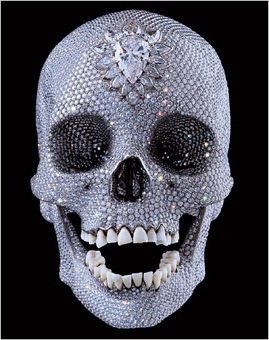
I've moved in my position since then. For one thing, I have less criticism for mainstream hip hop as an entity. Simply put, Hot 97 made this summer for me. I've been all about Throw it in the Bag, Who's Real, and that Hurricane Chris song about Halle Berry. For me, mainstream music has become so fascinated with an American construction of materialism that this very philosophy is no longer its purported downfall. In fact, it's one of the most outstanding, self-aware critiques of capitalism I know. We've seen sculptor Damien Hirst's diamond skull, we know this Marxist critique of capitalism, it's old hat. Mainstream hip hop raises it one: critical acts from within capitalism's very framework. Fabolous bragging of his diamond-studded watch is an act of resistance, suggesting that the oppressive system isn't as far-reaching as it wants to be, and that some of the very people (young black males) who weren't suppose to acquire power, did. This is relevant in a way that a comfortable upper-middle class white guy calling out capitalism is not. It's also as powerful as any critique coming from backpack rap.
Thus, this post is dedicated to anyone who has off-handedly thrown out the terms "pop music" or "gangsta rap" or "popular rap" as an example of crappy music, or as a reference to the decline of American society. HI HATERS.

PS
There has been a rise of hybrid rappers lately, who question the boundary between mainstream and underground. This is a beautiful thing.
(More on that here, shamelessly)

9.16.2009

Nothing to do with IP addresses


I have few fears and obsessions over the apocalypse, but there is one thing that I have been genuinely worried about: 2012. Maybe it's because I trust the Mayans quite a bit. I studied them a lot in the second grade - they were a truthful and intelligent people, and I surely trust them a whole lot more than the hundreds of christian seers and prophets who have predicted the same thing numerous times in the past.

The Mesoamerican calendar (given to humans by the Mayan god Quetzalcoatl, pictured above in human form) is divided into eras, and our current 13th baktun era is set to end on either december 21st or 23rd, 2012. Now, many people have disseminated this theory as "the end of the world", including at least one John Cusack movie, and one website which has finally set my fears to rest. It's called the 2012 Official Countdown, and it's just the kind of propagandist "truth" that makes me believe exactly the opposite of what it says.

The truth about 13.0.0.0.0. It has nothing to do with IP addresses and everything to do with your future... and life as we know it...

The Mysterious Planet X will shift into earth's rotational path and collide with our planet! All life that isn't immediately destroyed will be flung from the surface and into space

A meteor will hit the earth, causing concurrent massive tsunamis . The impact will make the bombing of Hiroshima look like a ripple from a pebble tossed into a lake.

Who could possibly know all of this? No professed member of one line of thought could ever claim to know so much about the future. No, it would take a much wider plane of knowledge.
The internet, of course.

Mr. Sayer is a respected Internet scholar with a concentration on the topics of history, spirituality and exposing untruths. He is known for his laser-targeted revelations on the complicated Mayan calendar system used to determine the true nature of 2012. Conspicuously silent while most of the ferver over 2012 raged... Sayer ended his self-imposed media boycott in late 2009 because as he put it... “I could no longer stand back and watch as the general public was lied to.” Sure, theories and theorists come and go... But James Michael Sayer is among the few “doyens” to stand firm and true. He never wavered from the truth no matter what kind of pressure he has been put under. And he's seen plenty of pressure.

“But... this stuff isn't in the bible. And if it's not
in the bible, it just ain't true!”
Who said this wasn't in the bible?
Which bible are you reading?
Because... I promise you, it's in there.
And I'll show you where.

But when you boil it down, there is one truth to this entire tirade:

In 2012...
something will happen. Because... to say nothing is going to happen, means you're just not paying attention.

Personally, I'd like to see things happen in 2012. I hope you'll be strong and smart enough to see them happen for me, too. That is, if you don't burn up the second Planet X hits Earth

8.20.2009

STIMULUS PACKAGE

I admit it, I slept on Sha Stimuli pretty hard. Every now and then, dude's name would show up on some obscure mixtape crowded with Wu affiliates and Cormega knockoffs, but I never paid any attention. I should've. In fact, I'm beginning to imagine how satisfying the last couple years of my life would've been if I wasn't totally blacked out on Wu-Tang fringe material. Why? Because from January 08 to January 09, Sha Stimuli dropped 12 mixtapes. That's right-- 12 months, 12 full-length tapes. Don't believe me? And these aren't your typical filler-riddled joints either-- many of them are concept albums, including the stand-out Hotter Than July, a Stevie Wonder-inspired tape that exclusively samples the R+B legend.

Ok ok. Who the fuck has time to listen to 12 mixtapes by a relatively unknown Brooklyn MC? And what would that even prove? That your boy is prolific? That don't mean shit. Agreed. But scope any of Sha's freestyles or verses, and you'll hear creative rhyme schemes, a personalized flow, a knack for punch-lines, and an honest passion for hip hop that DOES mean shit.


Sha has all the makings of a technially great rapper, but what really makes him stand out from other MCs is his intellect, sincerity, and self-awareness. It's this self-awareness which makes him so unique among peers. Very rarely do underground rappers acknowledge a desire for commercial success, and it is equally rare for mainstream artists to speak of themselves as anything but the GOAT. Yet Stimuli positions himself in that grey area between the two, boasting a huge ego while simultaneously acknowledging his struggle to be successful within a context of "underground authenticity." In other words, peep the first verse on "Win the Fight," off Hotter Than July:

Oh you thought that I was playin?/ I do albums in my sleep so while you dream of gettin paper I cause nightmares like you seein' Satan
I showed up at Summer Jam feelin like Son of Sam/ Lookin at the stage in a rage/This is stupid yo/ I'm standin here mad at myself so I hit the studio/ And wrote this/
No hit record, no underground...
I'm up to somethin/ To intertwine fluff and substance/ The hip-hoppers gone feel it and the thugs will love it

Stimuli's penchant for reflexivity is further on display at his blog:
As much as this hurts me inside I have come to grips with the fact that I do not look scary at all to strangers. I can have my earphones in bopping to my music with the meanest of faces on a dark New York street and some elderly Caucasian lady will tap me on the shoulder and ask me for directions without hesitation. I want to say “Don’t I look frightening? Why aren’t you concerned that I’ll rob you Miss?”
The MC's reflections always seem to invert traditional ways of thinking about what is good (from a liberal perspective) for hip hop music and artists. Yet all this looking in the mirror seems to be good for Sha. As long as he knows where he is within the game, then he can keep banging out fresh material that challenges an audience stuck crabbily arguing about Underground vs. Mainstream. Which is why I'm so excited by this:


Further reading: