Showing posts with label Pop Music. Show all posts

2.15.2010

kill too hard

Lil' Wayne is going to be in jail soon. He's going to be out of our lives for a long time, and we need to think about that.


I believe in the metaphor "spreading yourself too thin." I think it can be a real thing, overextension to the point where the ends no longer justify the means, or where quality of the product suffers at the hands of overproduction. And that's the metaphor people have been tossing around in regards to Wayne, Lil'. Whether it's his involvement in rock and roll, or his constant outpouring of verses and obscure features, people are saying that dude has gone too far, lost the talent that put him on the map in the first place. That he needs to slowwwww downnnnnnn.

So let's dig in to this metaphor a little bit, "spreading yourself too thin." The implication being that rapping/making music is like "spreading," that one has a limited amount of butter, or art, to spread with, and if they choose a piece of toast too big, they'll be wasting their skills. Okay. So the toast is ambition, the butter is artwork or music, and the act of creation is not unlike labor. That all makes sense to me. But in regards to Weezy F. Baby, this conceals the truth. It implies that the butter is an object outside of the artist, an external, material rendering of his talent that is then packaged and sold to the consumer on the basis of taste. Furthermore, it implies that the artist has chosen to enter into relations with his field in the same way one might choose a summer job. That is, he wakes up in the morning and decides to get the butter out of the fridge.

The problem is that we can't talk about Lil' Wayne in a conventional way, with conventional phrases like "spread too thin." We must recognize that for Weezy art is not the "externalization" or "initiated activity" that the butter metaphor implies, but a constant state of internal creation, second nature, the result of which just so happens to be art. He's the first rapper to truly be raised in rap, encountering it in the same way that one might encounter their first language. At age 11, he was virtually adopted by the rapper and CashMoney CEO Birdman. At 13, he accidentally shot himself with a .44. At 15, he joined Hot Boyz and spit his first major label verse. We know the rest of the story.


What we're witnessing with Weezy, then, is rap music growing up and raising its children (I mean goddamn, Jay-Z is 41!). And like any good adolescent, Lil' Wayne is finding ways of rejecting the image of his parents, dabbling in rock and roll music with his album Rebirth, and taking the concept of "grind" to the extreme by generating an endless amount of material. And it may just so happen that some think this art is "bad" (or, like me, they don't), but maybe we should consider that what we're judging may not be art in any traditional sense of the word at all, but the result of a person trying to express their emotions, thoughts, and dreams, etc in the only way they know how, hip hop.

So when Weezy goes to Riker's, I think we're going to realize just how significant he really is to this rap thing. It's impossible to imagine the rap world without him, just like it's impossible to imagine Lil' Wayne without rap. The timbre of his voice is so recognizable that you might imagine producers wanting a Weezy feature in the same way they want a heavy synth line or a wicked drum sample, so deeply has he permeated the collective aural life. And in doing so, he has not spread himself too thin, but instead covered the entire planet in a thick, syrupy coating of butter.

11.03.2009

We are not the same, I am a martian.

I used to be just like all the haters, but at least I knew it:

The flow chart above was an attempt to understand why an upper middle class kid might simultaneously disdain popular hip hop for being "inauthentic" and "capitalist," fetishize popular music, and embrace underground hip hop or "backpacker rap." Starting from the foundations of rap as black counterculture, and moving down, I tracked an internal divide in hip hop music, and how both sects have been appropriated by white audiences. As the legend goes, mainstream hip hop's primary audience is white kids in the midwest. Think about all those Souljah Boy videos of girls in white tees and Clemson sweatpants. On the other hand, underground music has also been appropriated by a white audience, as a music that has some sort of power- in its perceived authenticity, and its anti-capitalist tendencies. Stop a random kid at an elite private college in the Northeast, ask him who his favorite rapper is, and you're as likely to hear the name Brother Ali as you are Biggie. The word "backpacker" has been thrown out in reference to this music, a term that resonates doubly, alluding to the purported "intellect" of underground music (backpacks), while also its appropriation into whiteness (backpacking, as in, rich kids hiking the Appalachian Trail). Listening to backpacker rap becomes a way for white kids to somehow gain a type of cultural "authenticity."

This is where I was at on 12/15/08.

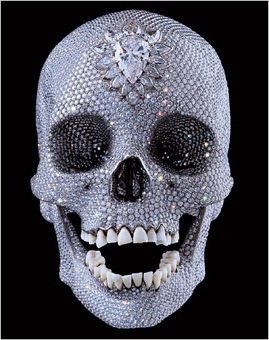
I've moved in my position since then. For one thing, I have less criticism for mainstream hip hop as an entity. Simply put, Hot 97 made this summer for me. I've been all about Throw it in the Bag, Who's Real, and that Hurricane Chris song about Halle Berry. For me, mainstream music has become so fascinated with an American construction of materialism that this very philosophy is no longer its purported downfall. In fact, it's one of the most outstanding, self-aware critiques of capitalism I know. We've seen sculptor Damien Hirst's diamond skull, we know this Marxist critique of capitalism, it's old hat. Mainstream hip hop raises it one: critical acts from within capitalism's very framework. Fabolous bragging of his diamond-studded watch is an act of resistance, suggesting that the oppressive system isn't as far-reaching as it wants to be, and that some of the very people (young black males) who weren't suppose to acquire power, did. This is relevant in a way that a comfortable upper-middle class white guy calling out capitalism is not. It's also as powerful as any critique coming from backpack rap.
Thus, this post is dedicated to anyone who has off-handedly thrown out the terms "pop music" or "gangsta rap" or "popular rap" as an example of crappy music, or as a reference to the decline of American society. HI HATERS.

PS
There has been a rise of hybrid rappers lately, who question the boundary between mainstream and underground. This is a beautiful thing.
(More on that here, shamelessly)